
How we went from ties and stockings to blazers over boxer shorts, and what we lost when work finally got comfortable.
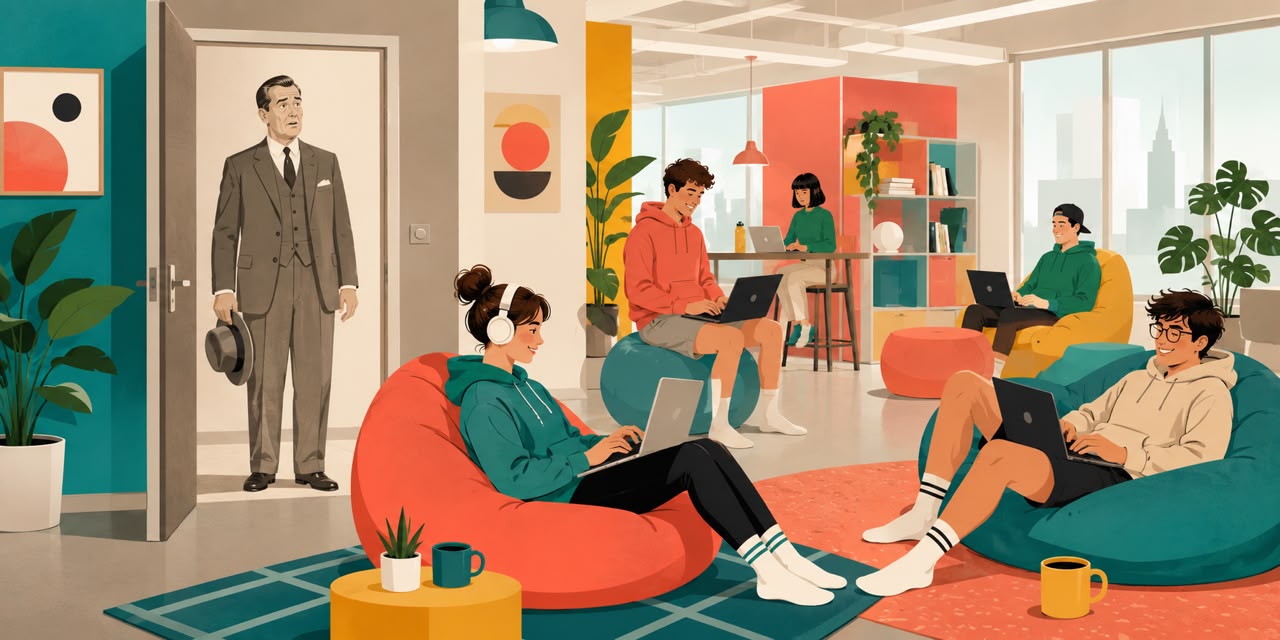
Drop a man from 1965 into a modern office on a Tuesday morning, and his first thought will not be that the future is amazing. His first thought will be that something terrible has happened here. He will scan the room for the person in charge and find nobody who qualifies. He will see a woman in a sweatshirt making decisions worth several million dollars. He will see a man in shorts holding a laptop like a hymn book. He will assume there has been a fire alarm, or a flood, or possibly a death in the building and that these poor people fled their homes in whatever they had on. He will wait patiently for everyone to go back and change.Sorry man, nobody is going back to change. This is it. This is the outfit.And somewhere behind him, quietly, without a funeral, without an announcement, without a single memo circulated to staff, the entire concept of dressing like you had a job lay down and died.
Your suit used to arrive at the meeting before you did
There was a time when clothes did the introductions. In the fifties and sixties, a man's collar was a résumé. The fabric said what floor you worked on. The shoes said whether you were rising. Women were handed an even narrower runway: stockings in August, heels on tile floors, a face fully assembled by eight in the morning, and a wardrobe budget that quietly ate the raise they had to fight for anyway. The office was cold, too, and not by accident. Building temperatures were calibrated around a man sitting still in a wool suit, which is why generations of women worked with a cardigan draped over the back of a chair like a permanent apology. The dress code did not just decide how you looked. It decided how comfortable you were allowed to be while producing identical work.And the tie. Let us pause respectfully for the tie.A strip of expensive silk, knotted at the throat, hanging down the front of the body, serving no purpose whatsoever except to point. That was the whole job. It pointed. Men wore a decorative arrow aimed at their own trousers every working day for roughly a century and called the practice “standards.”
The eighties turned getting dressed into a threat
The suit survived the seventies, though the seventies did unspeakable things to its proportions. Lapels widened. Collars grew until they could be used for directing aircraft. Brown entered the room and refused to leave. Then the eighties took the suit and weaponized it. Shoulder pads turned every woman in middle management into a linebacker with a filofax. Braces, watches, and hair with structural integrity. The purpose of clothing was no longer comfort or even taste. The purpose was to look like someone capable of ruining your afternoon. Nobody questioned any of it. You dressed like you had a job because the alternative was not having one.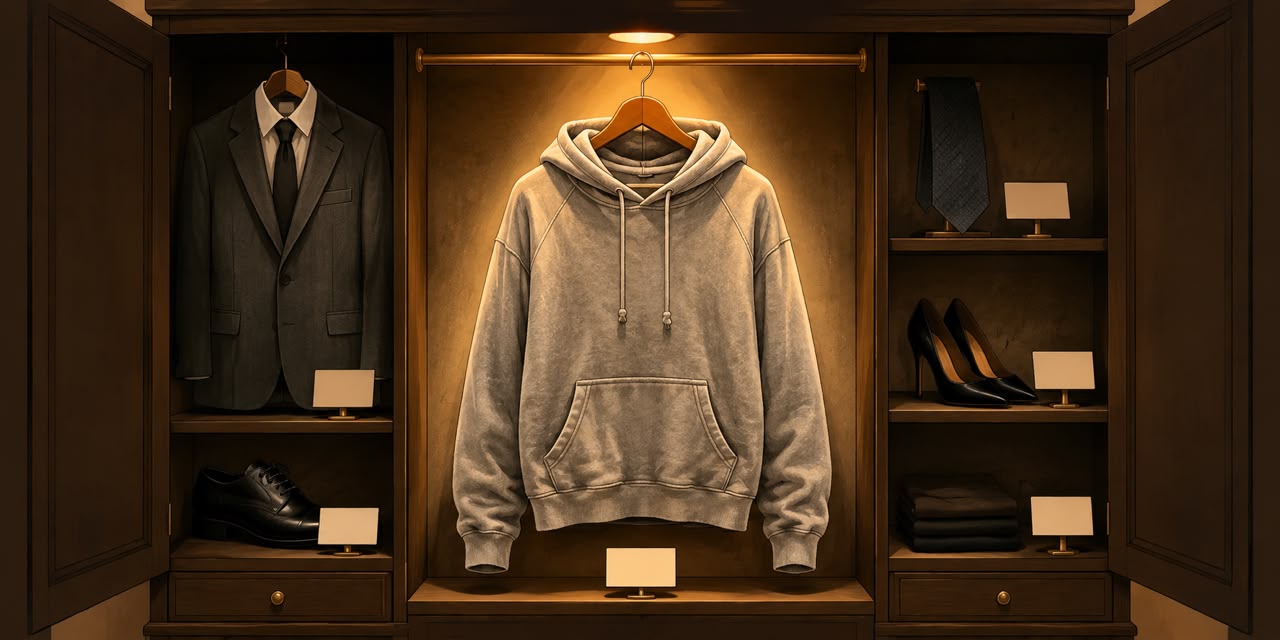
Casual Friday was a clothing industry marketing campaign
Just in case you didn't know, "Casual Friday" did not begin with a suffering office worker. It began in Hawaii, in the sixties, with a trade group called the Hawaiian Fashion Guild, whose actual business was selling Hawaiian shirts. They wanted more people wearing more Hawaiian shirts more often, so they ran a campaign to get aloha wear accepted as office clothing and handed two free shirts to every single member of the Hawaii House and Senate. Read that again. They gave the lawmakers the product and then asked the lawmakers to approve the product. It worked. Aloha Friday became a fixture, drifted to California, and spread across American offices through the seventies and eighties. Then came the problem that changed everything, and it is the funniest problem in the history of office life. Men were allowed to take the suit off and immediately had no idea what a body was supposed to wear. They turned up in shorts. They turned up in sandals. They turned up in the loudest shirt they owned. Rick Miller, the PR man who later worked on the Levi's campaign, summed up the panic in management perfectly. The worry, he said, was that "work might become too much fun." Which is when a second clothing company spotted the gap. In 1992, Levi Strauss produced a pamphlet called "A Guide to Casual Businesswear" and posted it to around twenty-five thousand human resources managers across America, calmly explaining what a professional might reasonably wear on a Friday. What a professional might reasonably wear, it turned out, was khakis. Levi Strauss happened to make khakis. The brand was called Dockers. They did not invent Casual Friday. They worked out how to sell it, which is considerably more impressive. By 1994, around half of the thousand largest companies in America had adopted the ritual, General Motors and Ford and General Electric among them. So the great liberation of the modern office, the thing we all think of as workers finally winning something, was a shirt advertisement followed by a trouser advertisement.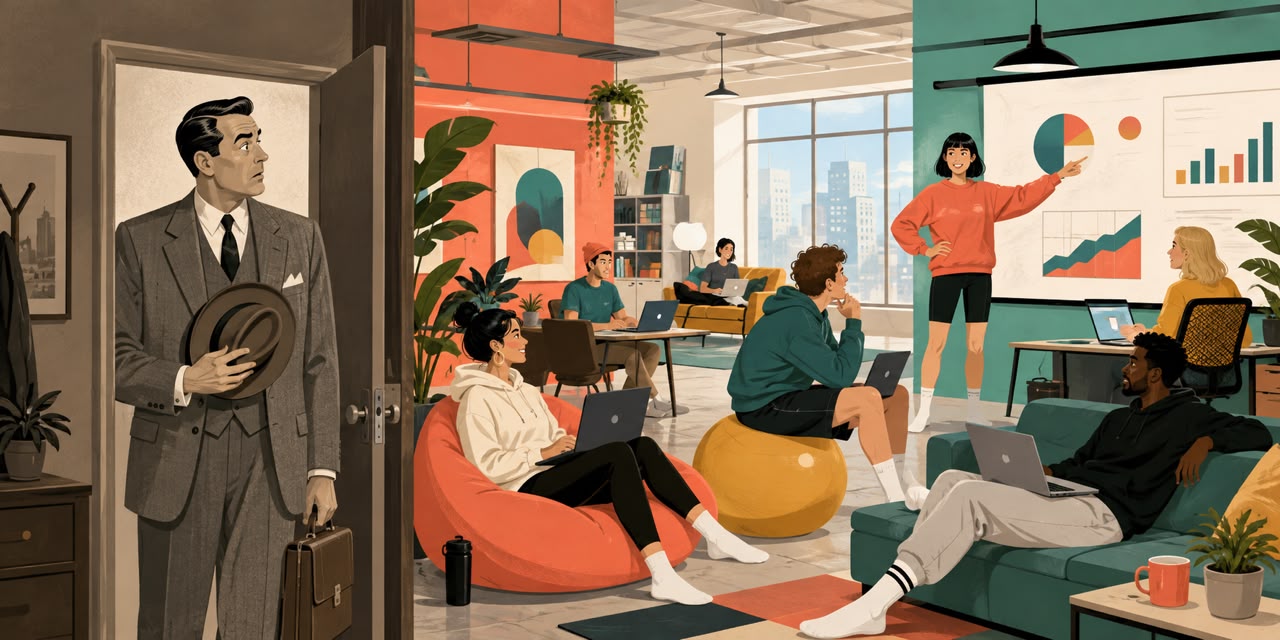 And it came with a hidden cost that anyone over thirty-five is still carrying, because it invented a dress code that could not be defined. Business casual was a riddle disguised as a policy. Nobody knew what it meant. HR sent an email saying, "Smart casual, use your judgment," which is the corporate equivalent of pushing someone into a lake and shouting encouragement from the shore.
Millions of adults have stood in front of a closet at seven in the morning holding two shirts, thinking: is this a shirt that says I respect the company, or a shirt that says I am trying too hard, or a shirt that says I have quietly stopped caring? Nobody was ever told. We were simply expected to know.
If you have ever changed clothes twice before work and then felt wrong all day anyway, you were not being neurotic. You were interpreting a document that had never been written.
And it came with a hidden cost that anyone over thirty-five is still carrying, because it invented a dress code that could not be defined. Business casual was a riddle disguised as a policy. Nobody knew what it meant. HR sent an email saying, "Smart casual, use your judgment," which is the corporate equivalent of pushing someone into a lake and shouting encouragement from the shore.
Millions of adults have stood in front of a closet at seven in the morning holding two shirts, thinking: is this a shirt that says I respect the company, or a shirt that says I am trying too hard, or a shirt that says I have quietly stopped caring? Nobody was ever told. We were simply expected to know.
If you have ever changed clothes twice before work and then felt wrong all day anyway, you were not being neurotic. You were interpreting a document that had never been written.
Then rich men discovered that dressing badly looks powerful
A small group of extremely wealthy men in California worked out something magnificent. If you have enough money, dressing badly stops being a failure and starts being a flex. The black turtleneck. The grey shirt bought in bulk. The hoodie worn to meetings with investors who were, technically, begging. There was even a moment in 2012 when a Wall Street analyst publicly complained that Mark Zuckerberg had worn a hoodie to pitch his company to investors, calling it a sign of immaturity. Facebook went public anyway. The hoodie won. The analyst is now a trivia question. And a strange inversion took hold that has never reversed. In the modern office, the person in the full suit is almost never the most important person in the room. He is the lawyer. Or he is here to sell something. Or, most ominously, he is here about the restructuring. Overdressing became suspicious. Walk into most offices today in a proper suit, and someone will ask, gently, whether you have an interview. Everyone knows. Everyone is being kind about it.Nobody can see your legs
 Then the world sent everybody home, and professionalism performed the fastest costume change in recorded history.
Within about three weeks, the global workforce discovered a truth so obvious it was almost insulting. The camera stops at your ribs.
Picture the man. Let us call him Gerald.
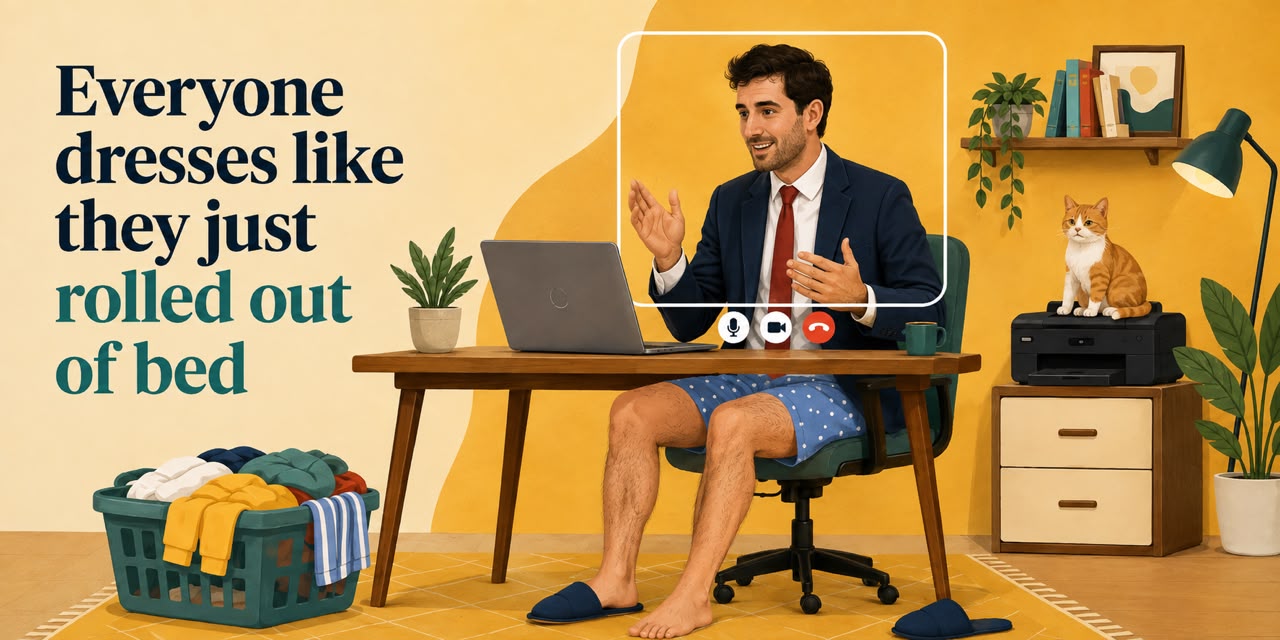
Gerald is on a call with eleven people and one client. From the shoulders up, Gerald is magnificent. Navy blazer. Collar pressed. A tie, an actual tie, knotted with the care of a man who has decided that today matters. He looks like the future of the company.
From the shoulders down, Gerald is wearing the old blue boxer shorts he has owned since college.
He is not ashamed. Why would he be? He has done the math, and the math is beautiful. Gerald is in a suit and in bed at the same time, and nobody in that meeting will ever know. He has never been more comfortable at work in his life. He is also making excellent points about the roadmap.
Then the client says, quite pleasantly, "Gerald, do you have that one-pager handy?"
And the one-pager is on the printer. And the printer is across the room.
Hold Gerald right there, frozen between his job and his boxer shorts.
Because what Gerald invented that year, we all invented. A blazer over a T-shirt over pyjama pants.
Then the world sent everybody home, and professionalism performed the fastest costume change in recorded history.
Within about three weeks, the global workforce discovered a truth so obvious it was almost insulting. The camera stops at your ribs.
Picture the man. Let us call him Gerald.
Gerald is on a call with eleven people and one client. From the shoulders up, Gerald is magnificent. Navy blazer. Collar pressed. A tie, an actual tie, knotted with the care of a man who has decided that today matters. He looks like the future of the company.
From the shoulders down, Gerald is wearing the old blue boxer shorts he has owned since college.
He is not ashamed. Why would he be? He has done the math, and the math is beautiful. Gerald is in a suit and in bed at the same time, and nobody in that meeting will ever know. He has never been more comfortable at work in his life. He is also making excellent points about the roadmap.
Then the client says, quite pleasantly, "Gerald, do you have that one-pager handy?"
And the one-pager is on the printer. And the printer is across the room.
Hold Gerald right there, frozen between his job and his boxer shorts.
Because what Gerald invented that year, we all invented. A blazer over a T-shirt over pyjama pants.
“Half of you attending a quarterly review, the other half attending a nap.”You know exactly what I am describing, because you did it too. You had the shirt. The one shirt. It lived on the back of a chair rather than in the closet, because putting it away would be inefficient. You put it on for meetings and peeled it off immediately afterward like a surgeon leaving the theater. Some of you ironed only the front. A brave few ironed only the collar. You developed the ritual too. The tilt of the laptop, angled upward to remove the chin situation and the room situation. The eleven seconds in the video preview where you rearrange your face into someone who has slept. Which brings us back to Gerald. He has three options and about two seconds to pick one. He can say he does not have the document, which is a lie and a small shameful one he will remember for years. He can try to slide sideways out of the frame while staying seated, which has never worked for anyone. Or he can stand up like a man. Gerald stands up like a man. For one second, eleven colleagues and one paying client see the whole truth. The tie. The blazer. The boxer shorts. A body cut clean in half by modern employment, top half running the meeting, bottom half still in bed. And nobody says anything. Not one person. The client looks slightly to the left. Someone unmutes, then thinks better of it and mutes again. The meeting simply carries on, because every single person on that call is dressed exactly the same way, and they all know it, and the silence is not embarrassment. It is loyalty. There was no memo. Nobody trained us. Somehow every person on earth independently invented the same shirt, the same tilt, the same panic, and the same policy of never mentioning it to anyone.

The things we never put back on
Something else broke in those years and never healed, and it is shoes. Go and open the back of your closet. There they are. The proper shoes. The heels that once represented ambition, sitting in the dark like artifacts from a crueler civilization, still holding the shape of a woman who used to walk across a parking lot in them at eight in the morning and considered that reasonable. The stiff leather ones with the soles that squeak on office carpet. You keep them. You do not wear them. You have not worn them since a wedding. Nylons quietly stopped being a thing anyone buys. Nobody held a vigil. Meanwhile, the lanyard survives, absurdly, as the last relic of corporate identity. The costume is gone, and the plastic rectangle remains, still swinging from a chest, still announcing to the room: this person is employed; we checked. And when offices reopened, an entire generation stood in front of the closet for the first time in two years and realized they had genuinely forgotten how to dress like a person with a job. Some overshot wildly and arrived dressed for court. Some undershot and arrived dressed for bed. The confidence was gone. The muscle had wasted away.We stopped dressing for work because work stopped ending
Here is what I keep circling back to. The uniform did not die. It moved. The suit was a costume, but it was an honest one. It was visible. It had a price you could look up. Everyone wore one, so everyone could see exactly what the game was. And the important part, the part we lost without noticing, is that it came off. At six in the evening you unknotted the arrow at your throat and became a person again. There was a door, a commute, a change of clothes, and a clean line between the version of you being assessed and the version of you just living. Now look at what took its place. Your bookshelf is assessed. Your lighting is assessed. Your background, your broadband, your reply speed, your green dot, and your willingness to be visible at strange hours. We congratulated ourselves on escaping the dress code and walked directly into one made of availability, which is worn on the inside, has no fabric, costs nothing to buy, and never comes off. You cannot hang your responsiveness on the back of a chair. Nobody has ever taken off their reachability at six and felt the relief of it. So the man from 1965 stands in the doorway, looking at the hoodies and the sweatpants and the woman in socks approving a budget, and he concludes that nobody here is working. He is wrong in the most interesting way possible. What he cannot see is that everybody here is working, and that they will still be working tonight, in that same hoodie, on a sofa, phone face up on the armrest. He is searching the room for the costume and cannot find it, so he assumes it was abolished.It was not abolished. It was made invisible, and then it was made permanent, and we agreed to it because it looked like freedom, and felt like comfort, and arrived, very cleverly, in the shape of a really nice hoodie.